Project Days at Schools
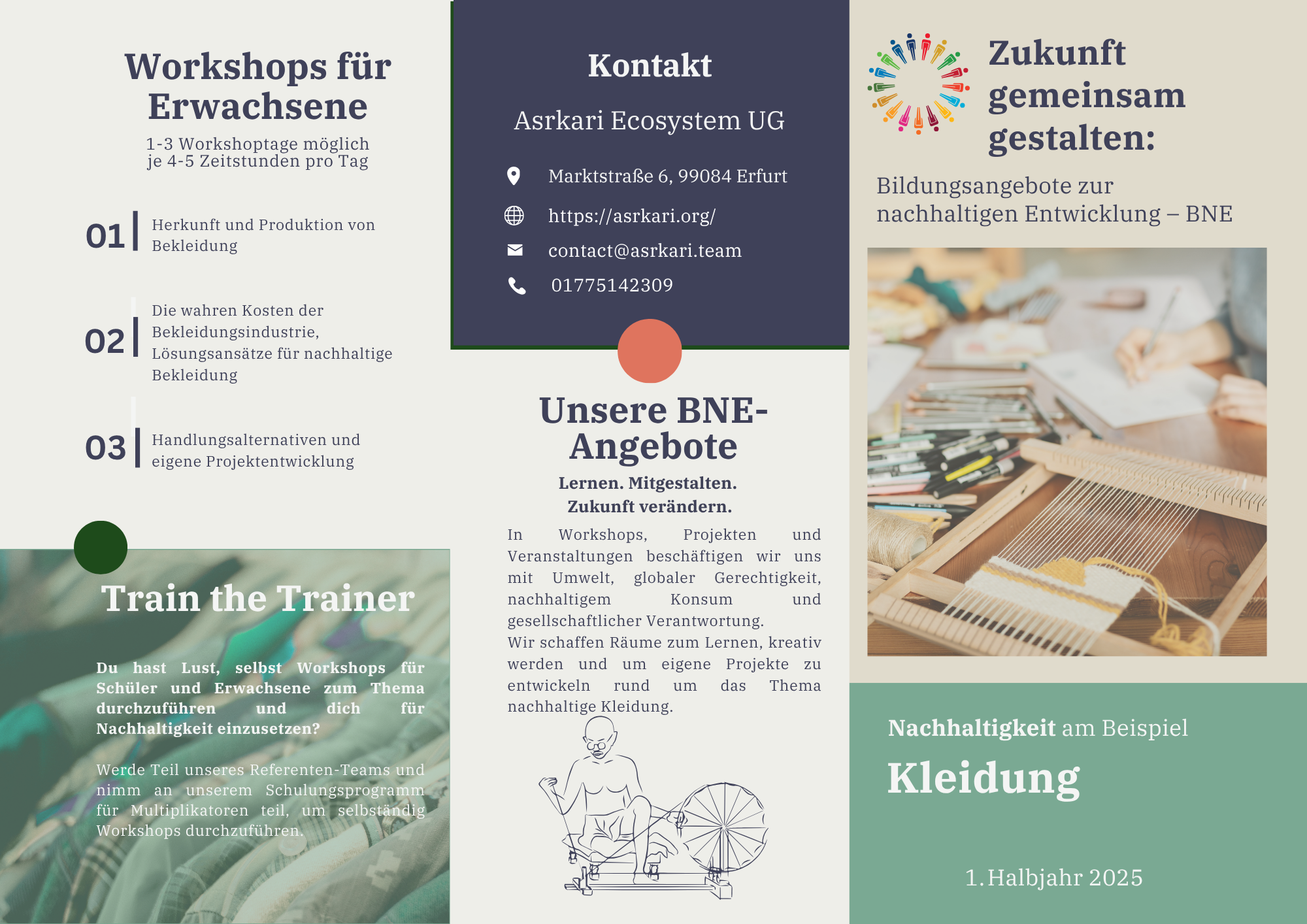
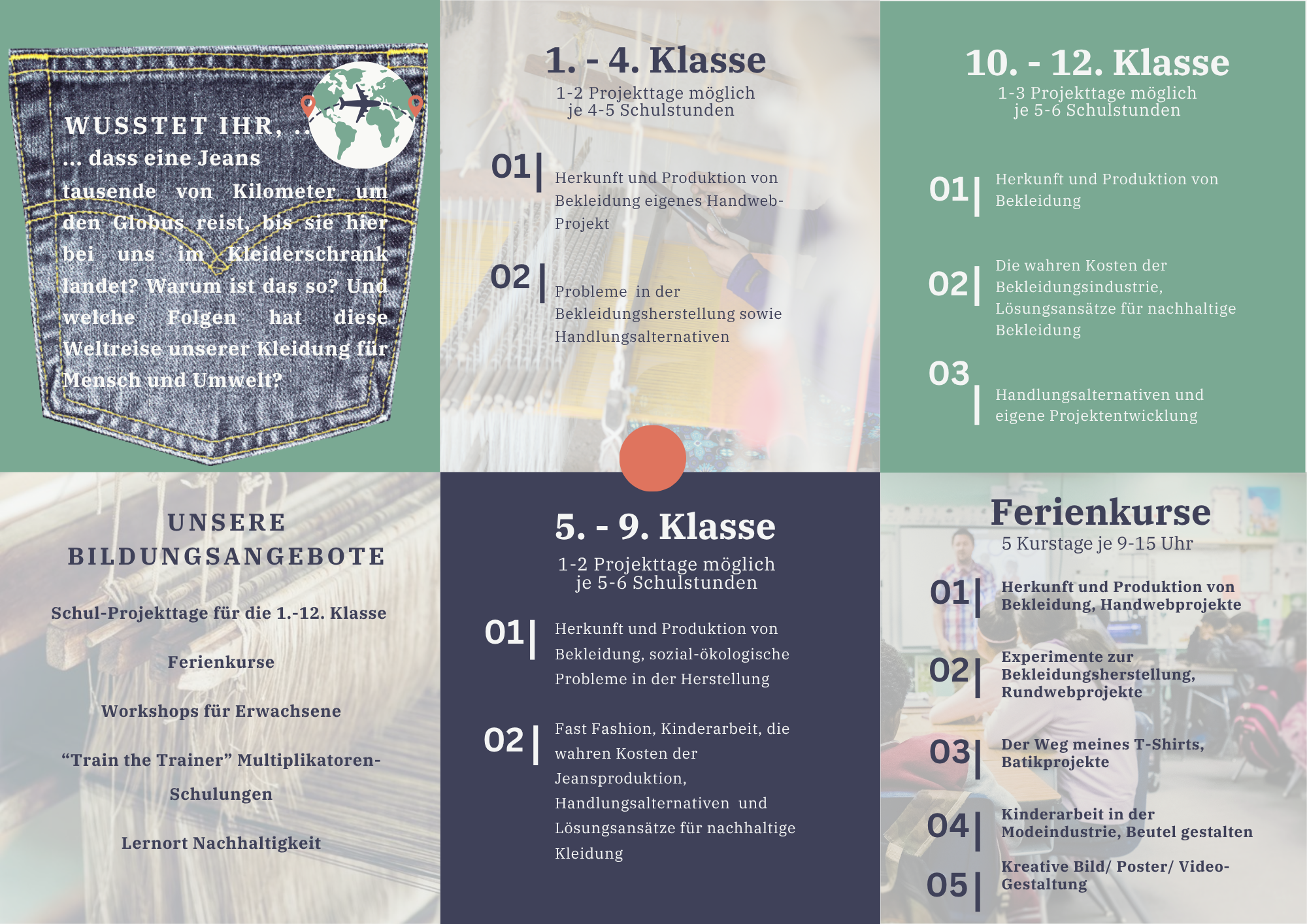
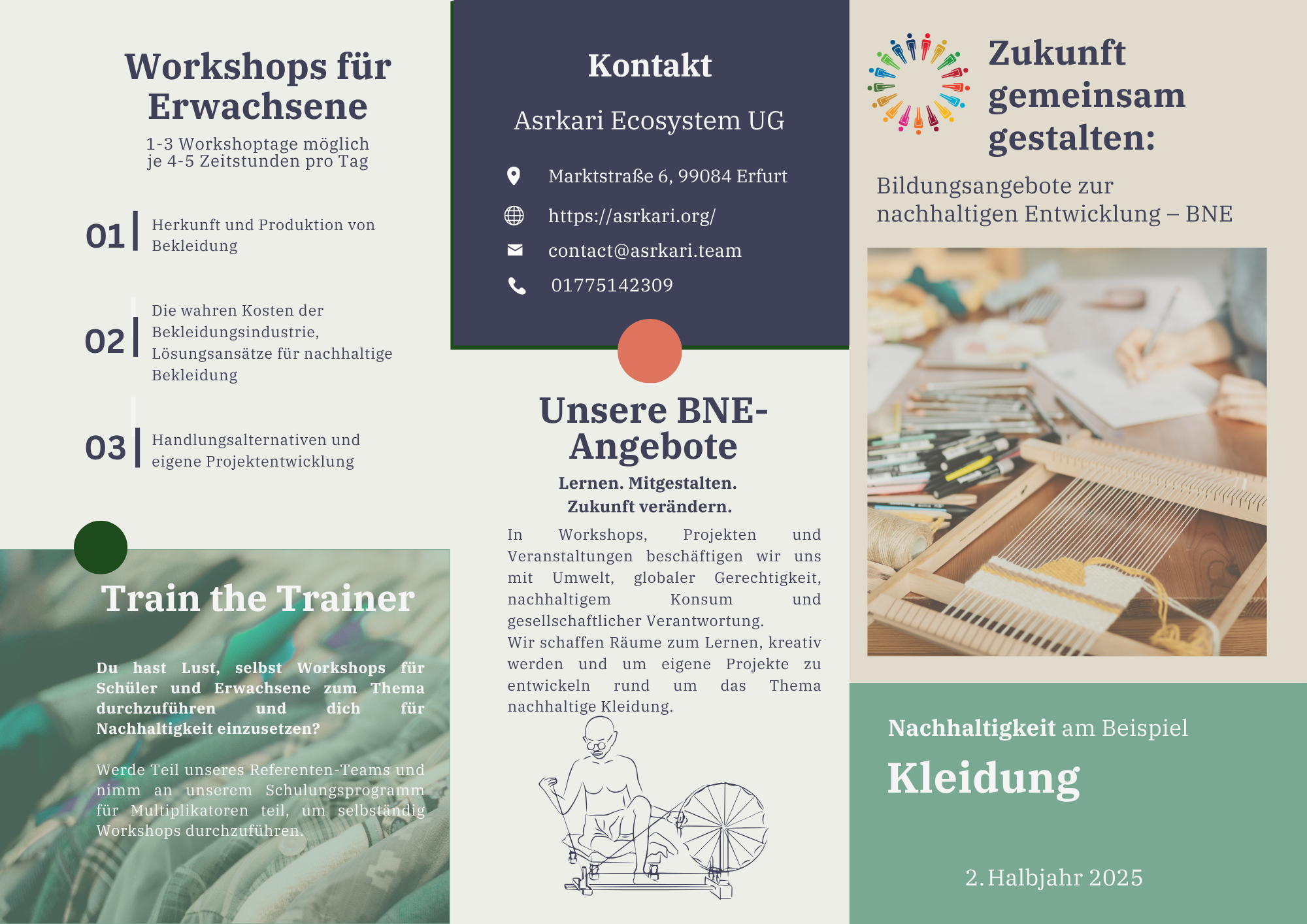
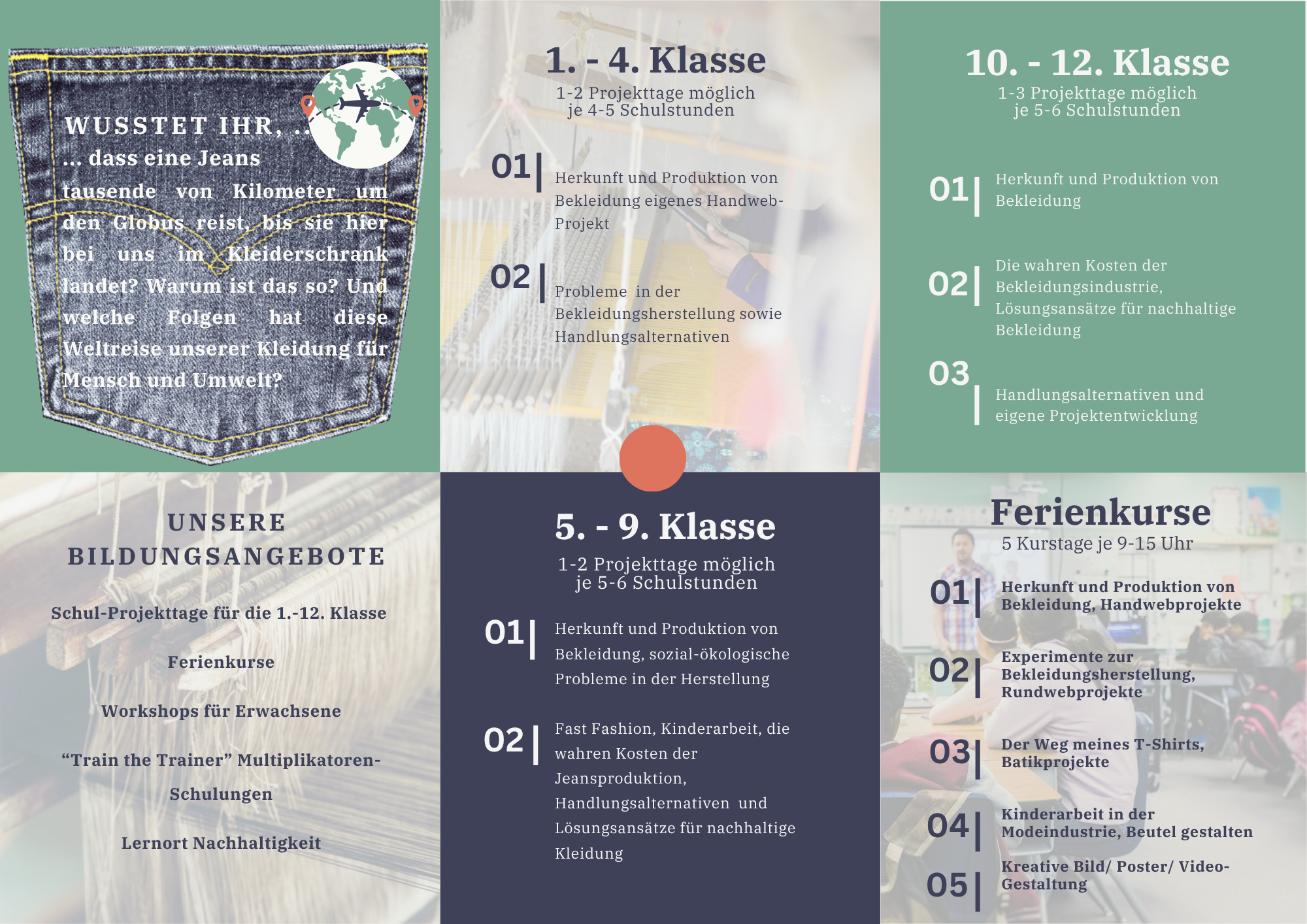
Interactive educational programmes for different age groups, adapted to participants' age, prior knowledge and learning needs.
Asrkari empowers people and communities through Education for Sustainable Development (ESD) and Global Citizenship Education (GCED). Through interactive workshops, project days at schools and events in public spaces, we translate the United Nations Sustainable Development Goals (SDGs) into practical and relatable learning experiences.
Education is the foundation for sustainable change. It creates spaces where knowledge about ecological, social and economic interconnections can be shared and reflected upon together. In this way, people develop the awareness and competencies needed to actively help shape a more sustainable future.
Our educational programmes follow a holistic approach to Education for Sustainable Development. ESD forms the fundamental educational principle underlying all of our educational work. Our approach is guided by international frameworks for Education for Sustainable Development, particularly UNESCO frameworks and the German Orientation Framework for Global Development.
We do more than communicate knowledge about global interconnections and sustainable consumption. We create learning spaces in which participants can reflect on their own behaviour and develop concrete opportunities for action in everyday life.
Through interactive and participatory methods, we encourage changes in perspective, collaboration and independent thinking. We connect ecological, social and economic dimensions and make their interdependencies visible.
Our goal is to empower people to make informed decisions and actively contribute to a more sustainable and just world.
Interactive educational programmes for different age groups, adapted to participants' age, prior knowledge and learning needs.
In-depth engagement with sustainability topics through discussions, group work and creative methods.
Formats designed to encourage critical thinking and deeper understanding.
Campaigns, exhibitions and public events that encourage social engagement.
Alongside our educational programmes, we support educators, facilitators and institutions.
Professional development for teachers, facilitators and civil-society actors.
Support for sustainability projects and the development of educational formats.
All of our programmes are tailored to their specific target groups in order to make learning relevant, effective and sustainable.
Our educational work connects social responsibility, global perspectives and concrete opportunities for action.
Asrkari is a public-interest-oriented, socially and ecologically focused startup committed to a fair, sustainable and solidarity-based society.
We believe that a good life for everyone around the world is possible if we use resources responsibly, reduce global inequalities and shape social and ecological sustainability together.
Education is a central part of our work. We see education as a key driver of societal transformation and as a foundation for empowering people to actively and responsibly shape the world around them.
Our work is based on the values of solidarity, justice, participation, diversity and tolerance, non-violence, ecological responsibility and future viability.
We strive for a just, peaceful and sustainable world in which everyone can live with dignity and security, in harmony with the natural foundations of life.
We envision a society in which people see themselves as active contributors to a global community — regardless of origin, gender or social status.
Our vision is a world in which education does more than simply transfer knowledge. It contributes to changes in thinking and action — towards global responsibility, social justice and sustainable ways of living.
Our goal is to raise awareness of global challenges through creative and participatory educational programmes and empower people to take responsibility and act independently.
Through interactive workshops, project days and educational formats, we create learning spaces in which global challenges become understandable, tangible and action-oriented.
Our programmes in Education for Sustainable Development (ESD) and Global Citizenship Education enable participants to recognise global interconnections, reflect on them critically and develop their own opportunities for action towards a sustainable future.
Our programmes are designed for children, young people and adults — particularly school students, university students, teachers, education professionals and people engaged in civil society.
Our educational work is guided by the goals of the 2030 Agenda, particularly human dignity, climate protection, sustainable consumption and production, inclusive economic development, gender equality, reducing inequalities, cooperation and non-violent conflict resolution.
We see Education for Sustainable Development as a foundation for societal transformation and as essential to achieving the Sustainable Development Goals set out in the 2030 Agenda.
In line with SDG 4.7, our programmes aim to contribute to promoting sustainable lifestyles, human rights, gender equality, a culture of peace and non-violence, global citizenship, appreciation of cultural diversity and the contribution of culture to sustainable development.
Through our educational projects, we strengthen participants' competencies for future-oriented and responsible action in a globalised world.
We organise educational and encounter-based formats that encourage reflection, strengthen critical thinking, enable changes in perspective and open up spaces for action.
Our work includes educational events, workshops and campaigns on topics such as global justice, sustainable consumption, climate justice, intersectionality, peacebuilding and democracy.
Our programmes are developed for specific target groups and take different lived realities into account, with particular attention to diversity, inclusion and intersectional perspectives.
Our work is built on cooperation and exchange. We value collaboration on an equal footing, transparent communication and shared learning processes.
We work with schools, universities, public and civil-society institutions, actors from the Global South and other partners.
Building strong and sustainable partnerships, including international partnerships, is a central element of our educational strategy.
Asrkari sees itself as a learning organisation. Our team culture is shaped by mutual respect, flat hierarchies, transparent communication and shared responsibility.
Decisions are made participatively, and we value team diversity and intercultural competence. As a small learning organisation, we continuously reflect on and further develop our work — based on practical experience, feedback and new impulses from our educational activities.
We connect local engagement with global responsibility.
Through our work, we do not simply want to inform people. We want to encourage them to become part of the change themselves.
We connect knowledge with one central question: What can I actually change?
To empower people to take responsibility and actively help shape a sustainable future.
Let's develop new ideas, learning spaces and stories of sustainable transformation together.
Contact usUNESCO (2017): Education for Sustainable Development Goals
KMK/BMZ (2016): Orientierungsrahmen Globale Entwicklung
de Haan, G. (2008): Gestaltungskompetenz der BNE
Asrkari is currently available only in: